

Four years of living in Portugal. That's a lot of pastéis de nata, a lot of bacalhau, and a fair few mistakes along the way.
We've eaten in family restaurants where the menu was handwritten in pencil and there was a football match on in the corner. We've had sardines at street parties where strangers slid over to make room at the table. We've also done the tourist thing by accident — waterfront restaurant, photo menu, fish that was clearly not fresh. You live and learn.
What follows is what we'd tell a friend who's visiting Portugal for the first time. Not a sanitised list of "must-try dishes." The real one, with the stories attached.
The 6 Dishes You Must Try in Portugal
1. Pastel de Nata — Start Here. Always.
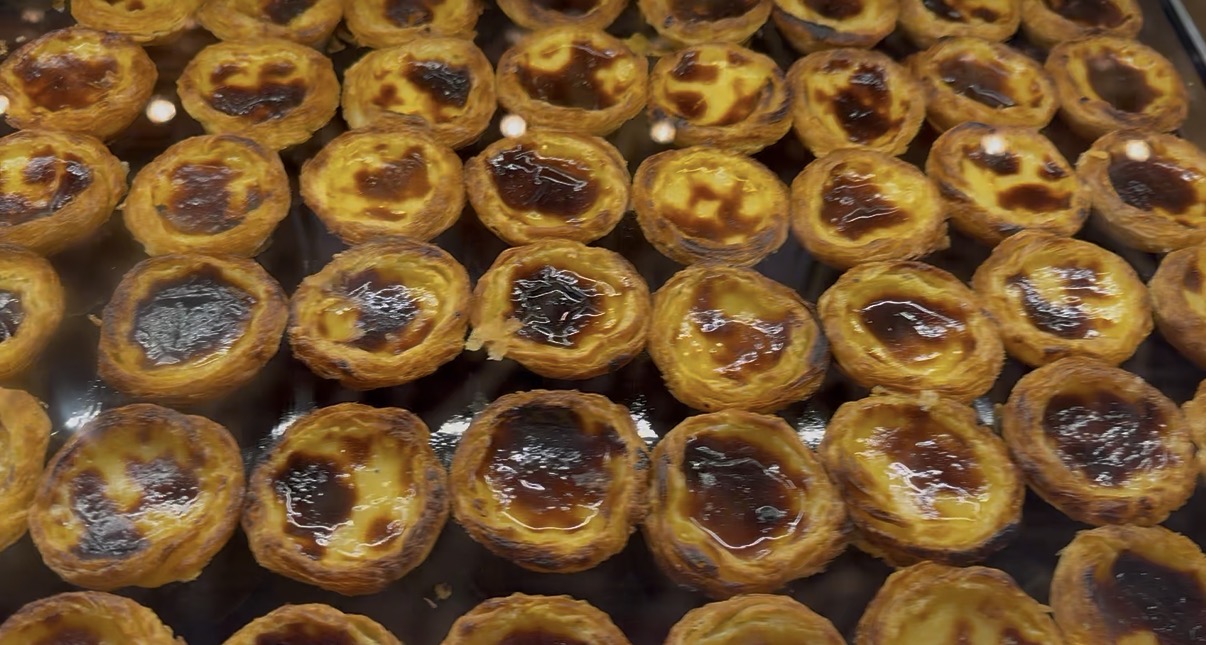
A pastel de nata is a custard tart — flaky pastry shell, egg custard filling that's slightly charred on top, wobbly in the middle. You eat it warm, with cinnamon and powdered sugar, standing at the café counter with an espresso. That's not a suggestion, it's just the correct way to do it.
We've eaten hundreds of these at this point. We've had bad ones — usually from places with them displayed uncovered in a glass case — and genuinely great ones from neighbourhood pastelarias that don't even have a sign outside. The quality difference is real.
The story behind it: The recipe was invented by Catholic monks at the Jerónimos Monastery in Belém in the early 1800s. The monks used egg whites to starch their habits, which left them with mountains of leftover yolks. Pastéis de nata were the solution. When the Liberal Revolution of 1834 closed the monastery, the monks sold the recipe to a nearby sugar refinery. That refinery became Pastéis de Belém — still open today, still using the original recipe. Only three people in the world know it.

The best one isn't necessarily in Belém, by the way. We have a whole guide to the best pastel de nata bakeries in Lisbon if you want our actual picks.
2. Bacalhau — The Dish Portugal Built Itself On
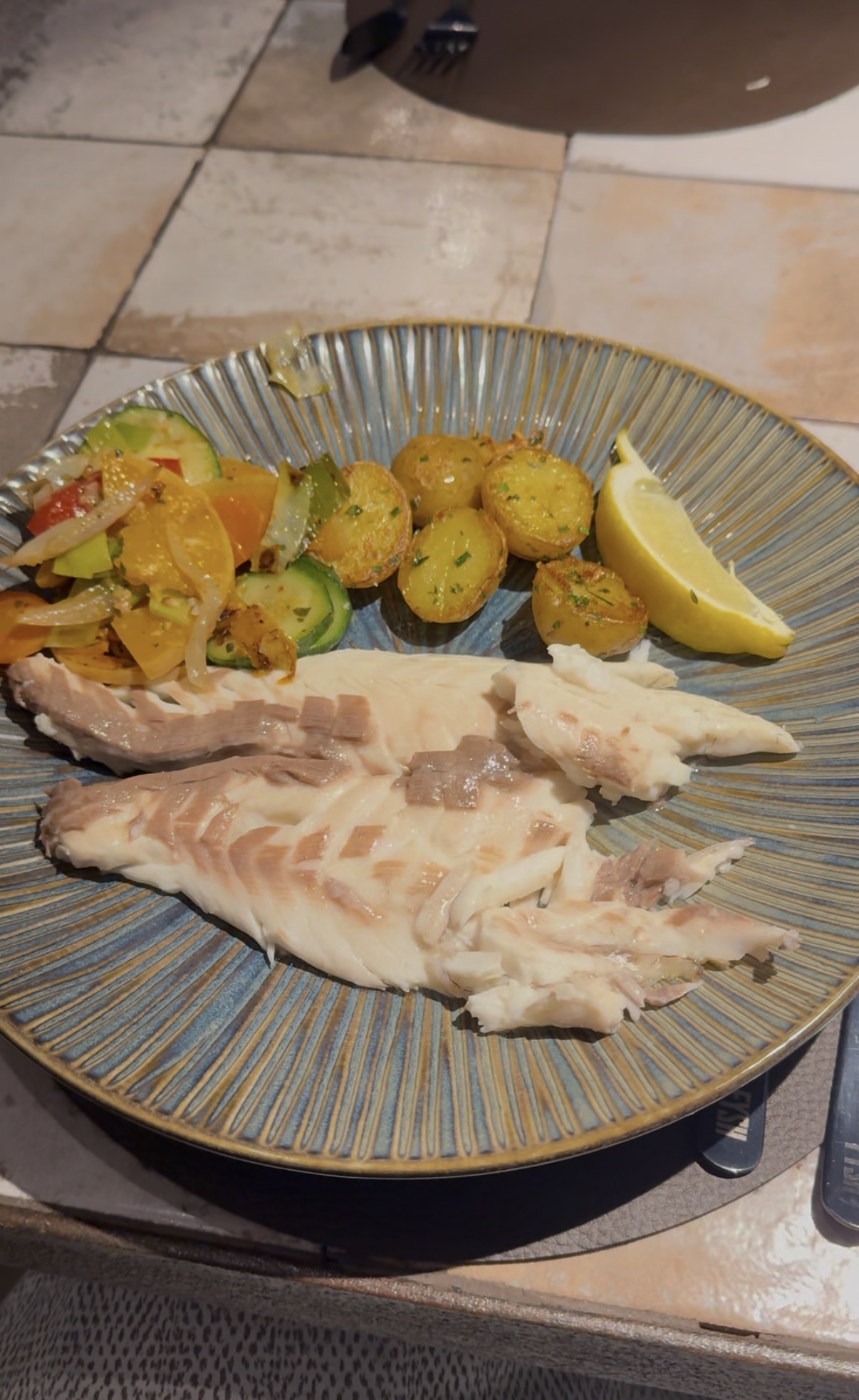
Bacalhau is dried, salted cod — and it is the national dish of Portugal in every real sense. There's a saying that Portugal has 365 ways to cook it. The actual number of documented recipes is reportedly over 1,000. In our four years here, we're are still not tired of this fish!
1000 recipes is a bit of an overkill... These are the three you should know:
- Bacalhau à Brás — shredded cod with scrambled eggs and thin crispy potato sticks, finished with olives and parsley. This is the one we order most. Comforting, quick, and hard to mess up.
- Bacalhau com Natas — baked cod with a rich béchamel cream sauce and sliced potatoes. Good for a cold evening.
- Bacalhau à Lagareiro — whole cod roasted with olive oil, garlic, and crushed potatoes. The simplest version. Often the best.
The story behind it: Portugal imports nearly all its bacalhau from Norway and Iceland — which is wonderfully ironic, because Portuguese fishermen were sailing to the Grand Banks of Newfoundland to catch Atlantic cod as far back as the 1500s, decades before other European nations settled there. Other nationalities called them os bacalhoeiros — the cod men. The fish crossed the Atlantic for centuries; now the fish crosses back already salted.
Fair warning: bacalhau smells intense before it's cooked. The first time we made it at home, we opened the package and immediately second-guessed everything. Don't. The finished dish is nothing like the smell. If it comes out aggressively salty, it wasn't soaked long enough — that's a restaurant problem, not a bacalhau problem. Find a proper tasca, not the waterfront tourist strip.
3. Francesinha — Porto's Greatest Achievement
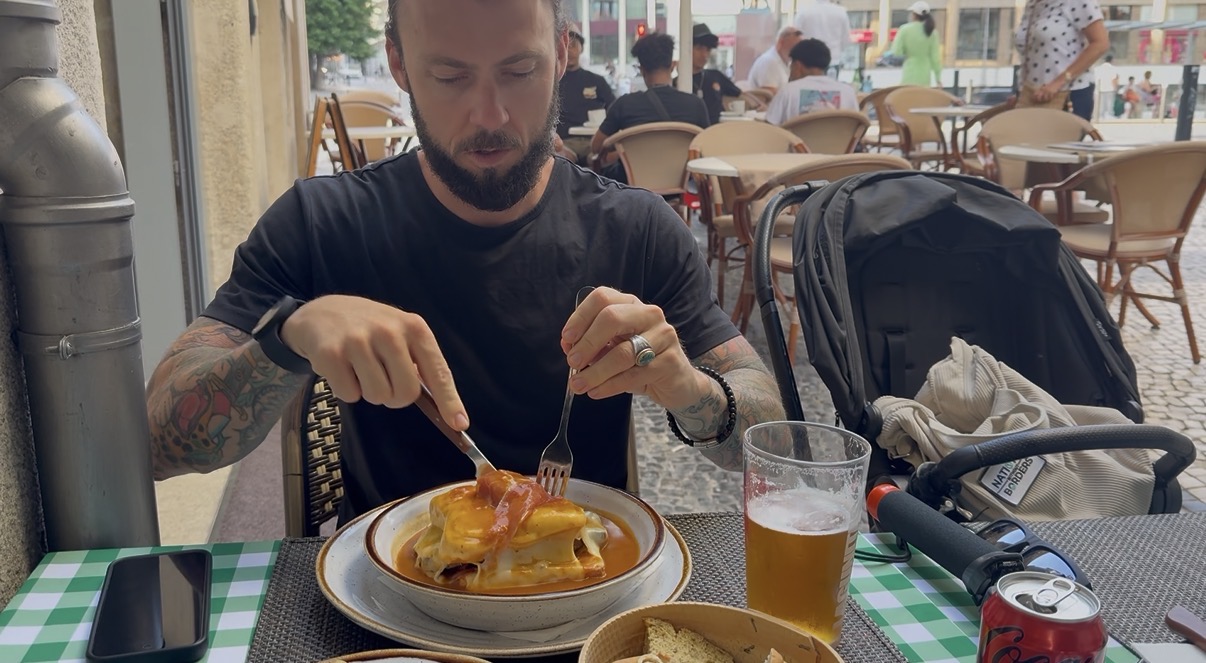
The francesinha is a layered meat sandwich — ham, linguiça sausage, steak — between thick bread, covered in melted cheese, then drowned in a spiced tomato and beer sauce. Fried egg on top. Fries on the side, which you eat by dunking them directly into the sauce. It's exactly as indulgent as it sounds, and it's brilliant.
The first time Josien had one in Porto, she thought she would get a heart attack from all the calories. It's a bomb! But it's also delicious and a must try (once).
The story behind it: Invented in Porto in the 1950s by a man named Daniel da Silva, who'd lived in France and Belgium and wanted to bring the croque-monsieur home to Portugal. He called it francesinha — "little Frenchwoman." What he actually created was something far more Portuguese: heavier, saucier, more unapologetic. Porto has been proud of it ever since.
One thing we can't stress enough: this is a Porto dish. If you see francesinha on a menu in Lisbon or the Algarve, that's a red flag. It's almost never done well outside Porto. When you're in Porto, skip Google and ask a local where they go. Every Porto family has an opinion, and they're usually right.
4. Bifana or Prego — The Best €3 You'll Spend in Portugal

The bifana is a marinated pork steak in a crusty roll. The prego is the same thing with beef. Both cost €2–€4, both are eaten standing at a café counter with an espresso, and both are among the most satisfying things we've eaten in this country — not because they're fancy, but because they're perfectly made and perfectly priced.
The bifana marinade is simple: garlic, white wine, paprika, bay leaf. The pork is thin, slightly crispy at the edges, and the roll soaks up the juices. There is no wrong version of this if you're eating it at a local café rather than a tourist café.
The story behind it: The town of Vendas Novas, about 80km east of Lisbon, is famous across Portugal for its bifanas. They hold an annual Bifana Festival, and thousands of people drive from Lisbon and Porto specifically for the occasion. A town of 12,000 people, a festival dedicated to pork sandwiches, thousands of visitors. That's Portugal for you.
Slightly random tip: the bifanas at Lisbon's main train stations are genuinely good and cheap. Do not follow the tiktok/instagram crowds, there are plenty of other places where you can get your hands on a fantastic bifana.
5. Fresh Grilled Fish — Simple and Unmissable

Portugal has 943km of Atlantic coastline and some of the best cold-water seafood in Europe. The approach to cooking it is beautifully simple: whole fish, charcoal grill, olive oil, salt, lemon. That's genuinely it. No sauce, no reduction, no chef trying to be clever.
The fish to order: robalo (sea bass) is the reliable choice, mild and flaky. Dourada (sea bream) is slightly firmer, great with herbs. Sardinhas (sardines), charcoal-grilled and served whole on a tile with bread on the side, are deeply, specifically Portuguese — and only really worth eating June through September when they're in season.
The story behind it: If you're in Lisbon on the night of June 12–13, you'll walk into something you didn't expect. It's the Feast of Santo António — and every neighbourhood in the old city grills sardines on the street. Neighbours dragging tables outside, strangers making room, charcoal smoke drifting through every alley. We've been to it multiple times now and it still gets us. It costs almost nothing to join in. If you're in Lisbon in June, don't miss it.
One practical thing: fish in Portuguese restaurants is usually priced per 100 grams. Always ask the price before you order — a large sea bass can weigh 700g and the bill can surprise you.
6. Caldo Verde — Don't Skip This One
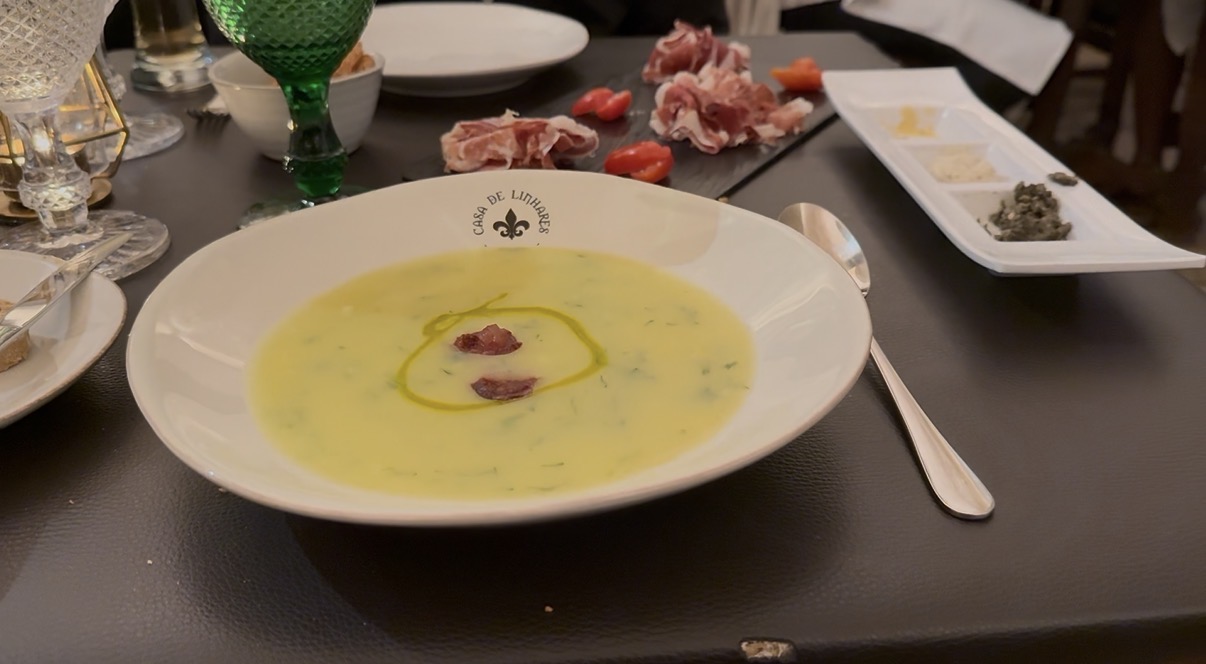
Caldo verde is potato and kale soup with a slice of chouriço. It looks like nothing. It tastes like someone's grandmother made it for you specifically. It's on almost every traditional menu as a starter, and most tourists skip it because it doesn't sound exciting enough. That's a mistake.
The kale is couve galega, cut into very thin ribbons — not chopped — which gives the soup its distinctive texture. The chouriço is added at serving, not cooked in the broth, so it stays firm and smoky.
The story behind it: Caldo verde is served at Portuguese weddings, christenings, and birthday parties. It's the food that most Portuguese people living abroad say they miss first — not bacalhau, not pastéis de nata. Caldo verde. There's something about its simplicity that carries the feeling of home more than anything more elaborate.
Order it in autumn or winter, at a restaurant that's been open for decades, with a thick slice of broa (cornbread) on the side. It'll be €3–€5 and it'll be one of the best things you eat.
What to Skip (or Manage Your Expectations On)

Sangria. Spanish drink. We made this mistake once and will not be making it again. Order vinho verde or a Super Bock instead. You'll be much happier.
Ginjinha from a souvenir shop. Ginjinha — sour cherry liqueur served in tiny chocolate cups — is genuinely great, but only from a proper hole-in-the-wall ginjinha seller in the streets (most likely a grandma with just a simple table). In Lisbon, find one in Alfama, it's the best experience. The bottled version from the tourist shop isn't the same.
Waterfront tourist restaurants. The restaurants along the Baixa shopping streets in Lisbon and the Ribeira strip in Porto are almost always overpriced and not representative of what Portuguese food actually is. Walk two streets away from the river. The prices drop, the quality goes up, and you'll actually be eating alongside local people.
How to Find the Good Restaurants
The pattern we've found after four years: look for a handwritten or chalkboard menu, no photos, and locals eating inside. Then look for a prato do dia (dish of the day). This is how Portugal feeds itself at lunch — soup, main course, drink, sometimes dessert, for €7–€12. It changes daily and it's almost always the best value meal you'll find anywhere.
The word for the kind of restaurant you're looking for is tasca: small, family-run, been in the same spot for years. No design budget. Sometimes a TV in the corner. The food is almost always excellent.
Timing matters too. Lunch is 12:30–14:30. Dinner starts around 19:30–20:00. Arriving before 19:00 for dinner is a tourist move — most kitchens aren't ready yet. For more tips on navigating Portugal like this, our 101 Portugal travel tips has everything we wish we'd known before we moved here.
If you're heading to Lisbon specifically and want our actual picks — the tascas we go back to, the miradouros we take every visitor to, where to stay, the walks we love — we've put it all in our 5-Day Lisbon Itinerary. It's the guide we wish we'd had when we first arrived.
Portuguese Food by Region — Quick Guide
- Lisbon: Pastéis de nata, seafood, petiscos (Portuguese tapas), ginjinha
- Porto: Francesinha, bacalhau à Brás, tripas à moda do Porto (tripe stew — for the brave)
- Alentejo: Açorda (bread soup), black pork (porco preto), migas, incredible olive oil and regional wine
- Algarve: Cataplana (seafood stew in a copper pan), fresh tuna, local oysters, figs
- Minho / Norte: Caldo verde, vinho verde, rojões (crispy fried pork)
FAQ: Eating in Portugal
Is Portuguese food spicy?
Almost never. The cooking is flavourful — lots of olive oil, garlic, herbs — but rarely hot. Piri-piri sauce is on the table if you want it. The kitchen isn't going to make that decision for you.
Is it easy to eat vegetarian in Portugal?
Getting better, especially in Lisbon and Porto. Traditional Portuguese cooking is very meat and fish-heavy, so in smaller towns your options narrow. Soups, eggs, cheese, and vegetable sides are generally available everywhere.
What does a typical Portuguese breakfast look like?
Toast or a slightly sweet dense croissant, a bica (espresso), standing at the café counter. Sometimes a pastel de nata. Fast, cheap, and eaten in about ten minutes. A full sit-down breakfast is mostly a tourist thing.
How much does eating out cost?
Prato do dia lunch: €7–€12. Dinner at a good local restaurant: €15–€25 per person with wine. Tourist-area restaurants: 30–50% more for less quality. A bifana: €2–€4. A pastel de nata: €1–€1.50.
What should I drink?
Wine. Portugal's wine regions produce some of Europe's best bottles at prices that still feel almost wrong. Vinho verde with seafood. Douro reds with meat. House wine at a local restaurant — €3–€5 for a jug — is almost always worth ordering.
One More Thing Before You Go
We've put together Portugal Travel Guides that cover everything we wish we'd had when we first arrived — what to eat, where to go, how to get around, what to watch out for. Everything we've learned the hard way over four years, in one place.
If you're planning a trip and want to do it properly, that's where to start.
👉 Shop our Portugal Travel Guides →
And if you want to see Portugal the way we do — on the road, in the water, with a toddler in tow — come find us on YouTube.
Keep reading: 101 Portugal Travel Tips · 10 Essential Portuguese Phrases · EU Travel Rules & the Schengen Zone