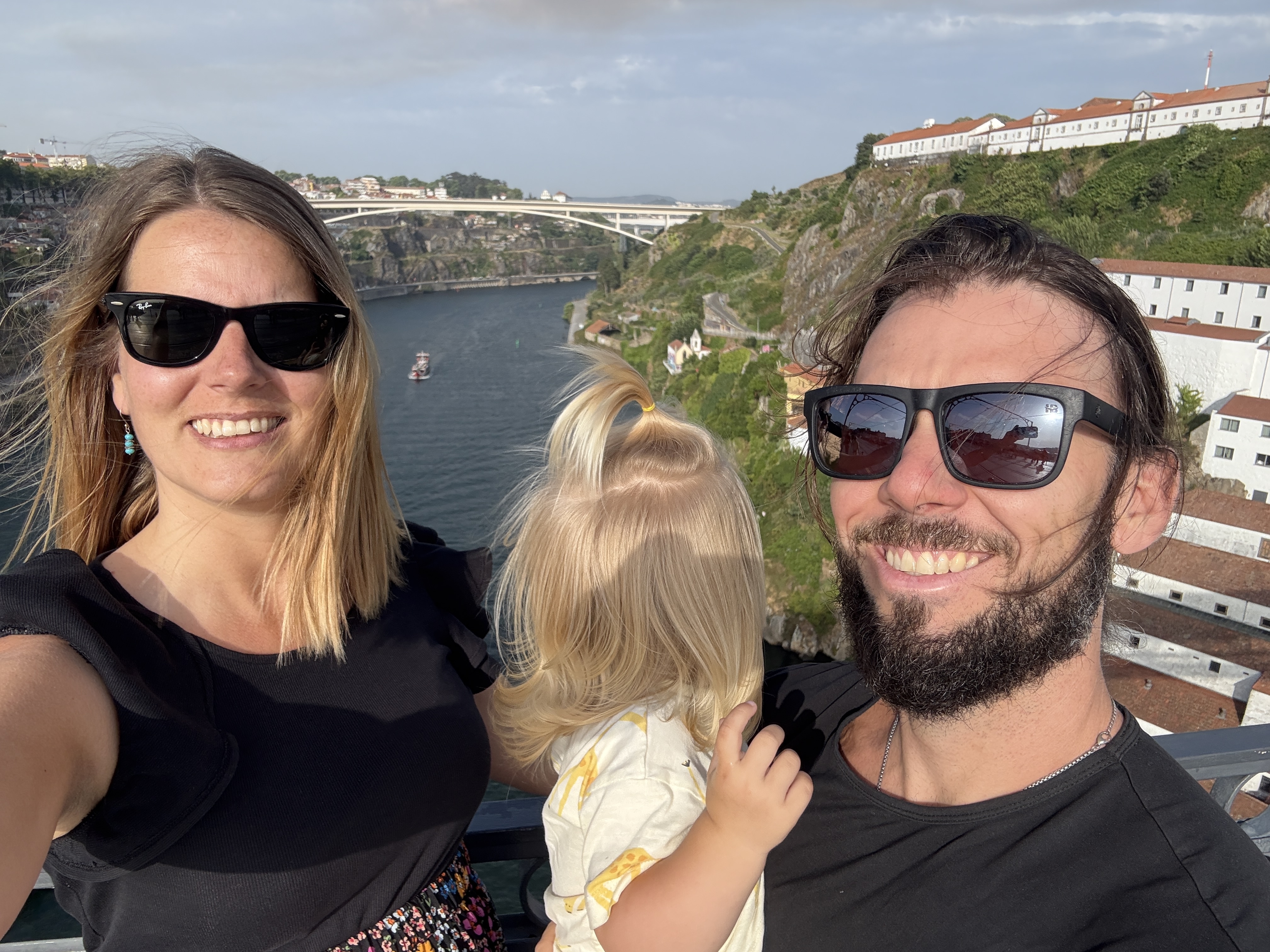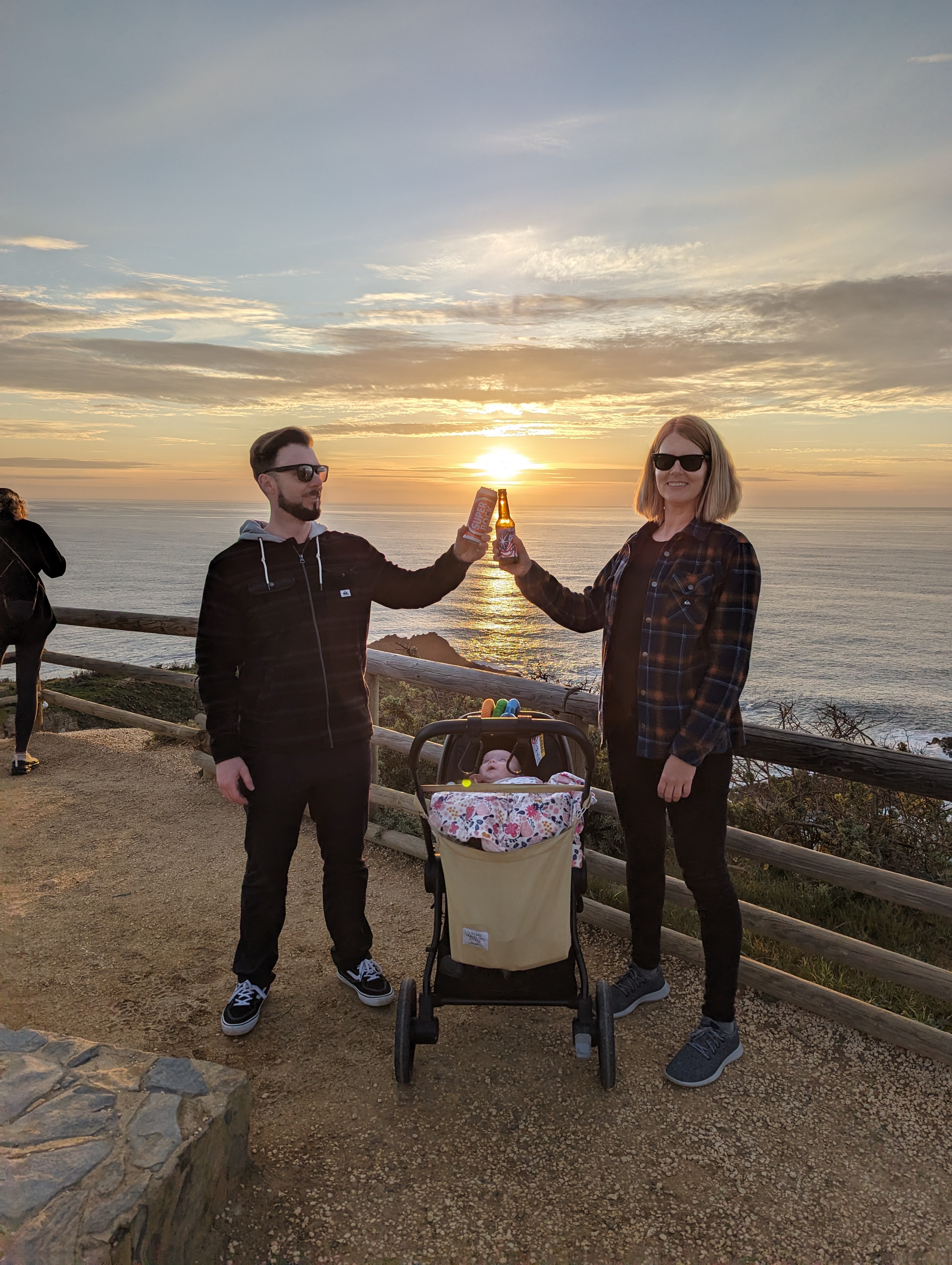

The first time I (Josien) said thank you in Portuguese, back in 2017, my tour guide corrected me. I said obrigado — the masculine form. He wasn't rude about it, just smiled and repeated obrigada and explained the different forms of the word. He basically said that I don't need to learn how other people say it, just need to remember that for me it would always be "obrigadA"... I think about that conversation every time I have friends visiting that are making the same mistake.
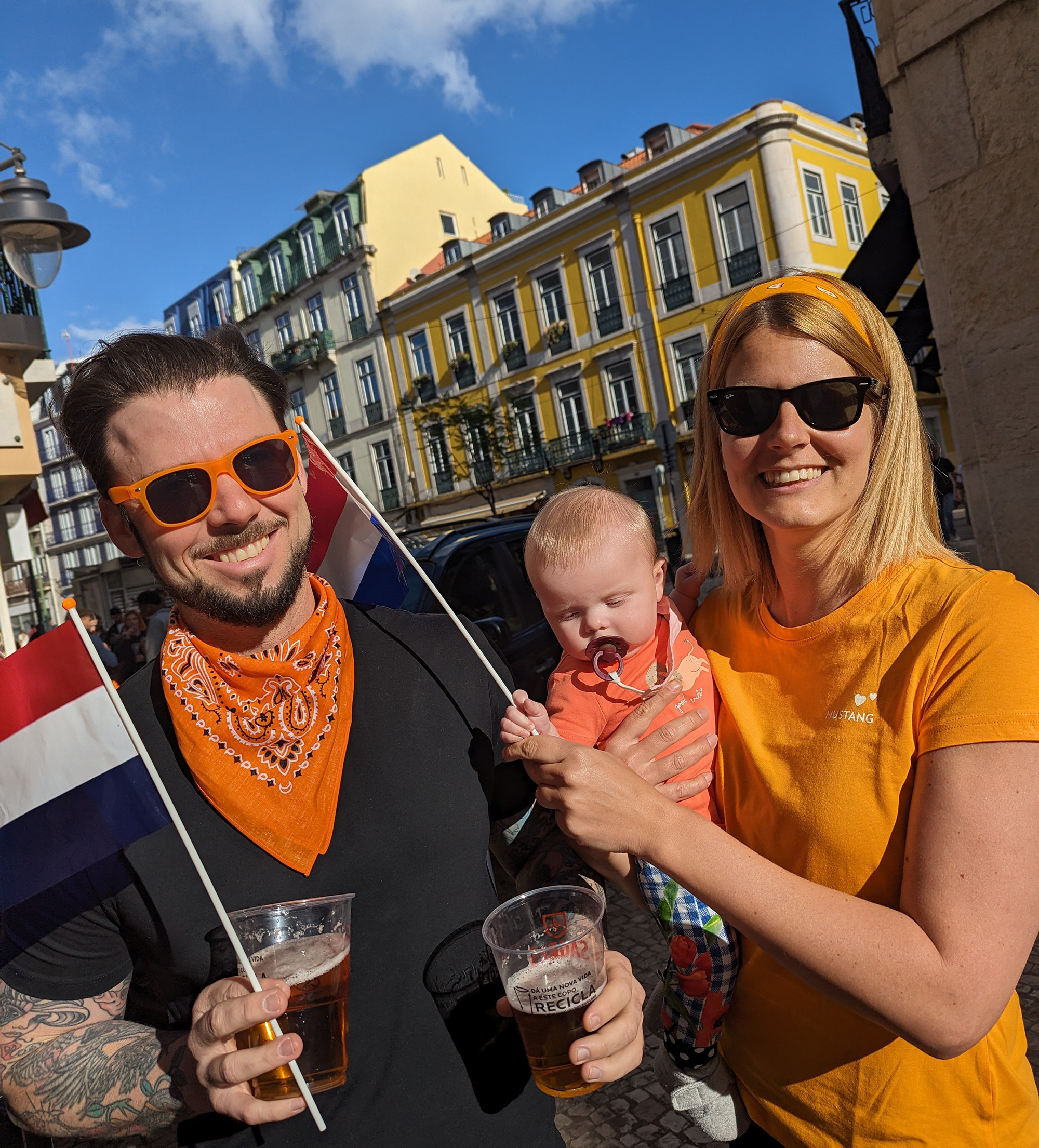
We've been officially living in Portugal since 2022, but have visited many times before we made the move, which means years of stumbling through the language, mispronouncing things in restaurants, and occasionally saying something that made a local's face do something unexpected. European Portuguese is genuinely hard. The vowels get swallowed. Words blur together. A friend once said that Portuguese sounds like a drunk Russian trying to speak Spanish... Agree with it or not, but it's a hard language to learn!
But here's what four years taught us: Portuguese people are warm when you try. Even attempting the basics changes how interactions feel. You stop being another tourist who expects everyone to speak English, and you become a person making an effort.
So here are the 10 phrases we actually use — explained the way we wish someone had explained them to us. Not just the translation, but the context, the cultural weight, and what happens when you get them slightly wrong.
Quick note before we start: European Portuguese sounds very different to what most learning apps teach. It genuinely helps to hear it before you arrive.
1. Bom dia / Boa tarde / Boa noite
Pronunciation: bom DEE-ah / boa TAR-deh / boa NOY-teh
Good morning / Good afternoon / Good evening. This is the most important phrase on this list — not because it's complicated, but because of what it does.
In Portugal, walking into a shop or café without greeting the person first is considered rude. Not dramatically rude — nobody's going to ask you to leave — but it's just human decency to great one another. The Portuguese value acknowledgement. Bom dia says: I see you, I respect you, we're starting this properly. Use it until around noon, switch to boa tarde through the afternoon, and boa noite from early evening.
Make eye contact when you say it. The greeting without the eye contact is only half the gesture. We noticed this from watching hundreds of interactions here — the ones that landed, the ones that opened people up, were the ones where someone actually looked at the person they were greeting. It costs nothing and it changes everything.
2. Por favor
Pronunciation: poor fah-VOR
Please. It goes at the end of a request, not the beginning: uma bica, por favor. A conta, por favor. Uma mesa para dois, por favor. Once you know this phrase, you can point at almost anything on a menu and make it a polite request. It does an enormous amount of heavy lifting and it's the second word you should burn into memory after whatever greeting fits the time of day.
You’ll also hear desculpe (desh-KOOL-peh) used frequently alongside it. Por favor makes the request polite. Desculpe softens the approach, especially when you're interrupting someone, getting attention, or correcting yourself. Together, they cover most everyday interactions without you needing much else.
3. Obrigado / Obrigada
Pronunciation: oh-bree-GAH-doh / oh-bree-GAH-dah
Thank you. Here's what most guides forget to mention: in Portuguese, thank you is gendered based on the speaker, not the person you're thanking. Men say obrigado. Women say obrigada. This trips up almost every English speaker, but once you know it, it's easy to remember.
Fun fact: the word comes from the Latin obligatus, meaning obligated or indebted. When you say thank you in Portuguese, you're literally saying "I am obliged to you." Which feels right. It gives the word more weight than a casual "thanks," and maybe explains why it still feels genuinely warm when a stranger says it.
Muito obrigado/a — "thank you very much" — is worth memorising as its own unit. It earns a smile almost every time.
4. Com licença
Pronunciation: kong lee-SEN-sah
Excuse me / may I pass. Use this when squeezing past someone in a narrow street, getting a waiter's attention, or entering a space where someone is already standing. The Alfama in Lisbon, the covered market in Bolhão, the Saturday feira in any small town — com licença is the phrase that moves you through crowded spaces gracefully rather than just pushing through.
For apologising after the fact — bumping into someone, interrupting — use desculpe (desh-KOOL-peh) instead. Portuguese distinguishes between asking permission in advance and apologising after. Small difference, but locals notice it, and getting it right feels satisfying once you do.
5. Fala inglês?
Pronunciation: FAH-lah een-GLESH?
Do you speak English? Portugal consistently ranks among the top countries in Europe for English proficiency — especially in Lisbon, Porto, and the Algarve. In cities, the answer is usually yes. But asking it still matters. It signals that you're not assuming, that you've made at least a small effort. The response is almost always warmer than if you'd just launched into English without trying.
In rural areas and smaller towns, English drops off significantly. We've had some of our best moments in Portugal in places where communication happened through pointing, drawing, and mime.
6. Quanto custa?
Pronunciation: KWAN-too KOOSH-tah?
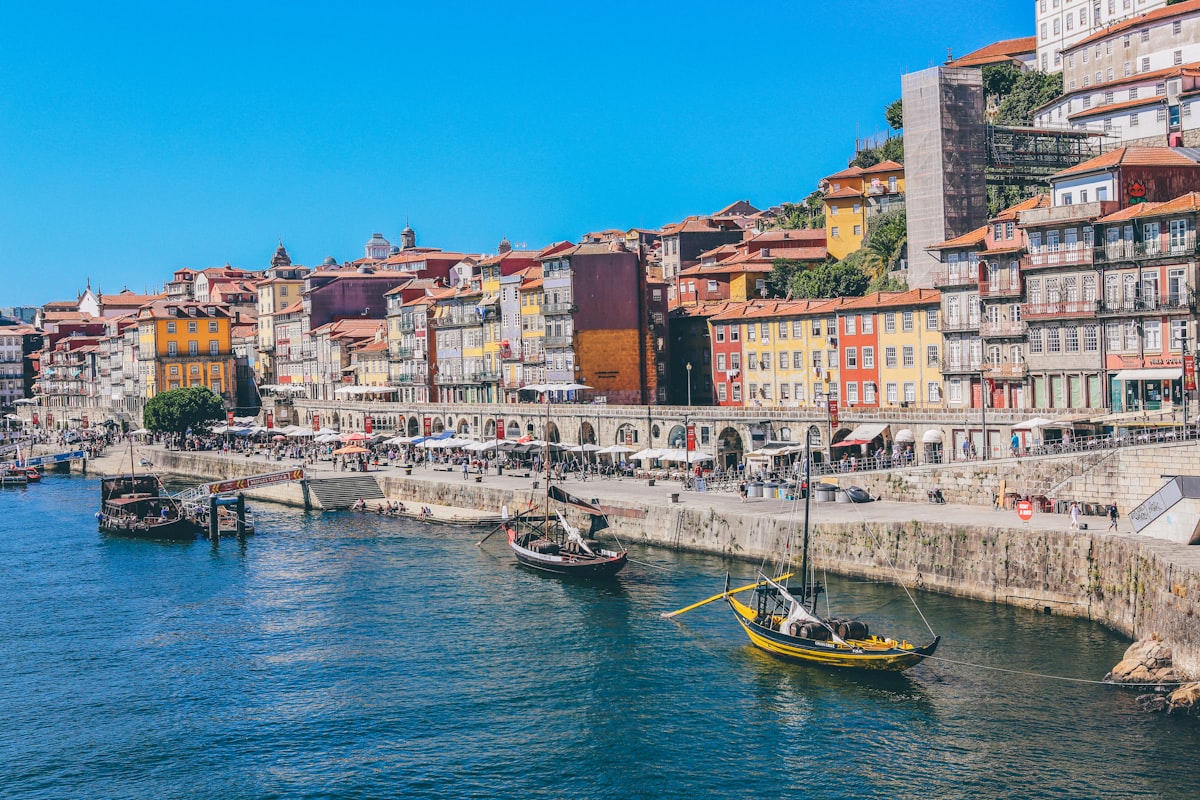
How much does it cost? Essential at markets, small shops, and seafood restaurants where fish is priced by weight. We wrote about this in our guide to what to eat in Portugal — always ask the price before ordering fish sold by the kilo, and this is the phrase that does it. Qual é o preço? (kwal eh oo PREH-soo) means the same thing and is slightly more formal if you prefer it. Either works.
Markets in Portugal are some of our favourite places to spend a slow morning — the Mercado de Loulé in the Algarve, the Feira da Ladra flea market in Lisbon, the Bolhão in Porto. Being able to ask quanto custa? makes you feel immediately less like a tourist and more like someone who's actually there.
7. Uma mesa para dois, por favor
Pronunciation: OO-mah MAY-zah PAH-rah DOYSH, poor fah-VOR
A table for two, please. Walk in, make eye contact, say this. Swap dois (two) for três (three) or quatro (four) as needed — or just hold up fingers if numbers desert you in the moment.
In Portugal, you wait to be seated. You don't seat yourself. Stand at the entrance, make eye contact with whoever's managing the floor, and use this phrase. And then settle in, because the pace here is unhurried by design. Sitting down doesn't mean someone will rush over. This is not neglect — it's how restaurants work here. Once you stop expecting it to run like a London café, the whole experience becomes a lot more enjoyable.
8. A conta, por favor
Pronunciation: ah KON-tah, poor fah-VOR
The bill, please. In Portugal, the bill doesn't come until you ask for it. Bringing it unsolicited is considered rude — it implies you want the customer to leave. So if you've been sitting there waiting for it to appear, the restaurant is simply waiting for you to ask. Say a conta, por favor, or write an invisible signature in the air. Either works.
One more thing about restaurant tables in Portugal: those bread rolls, olives, and little bites of cheese that appear when you sit down? They're not complimentary. They're called couvert and they'll appear on your bill. If you don't want them, say não, obrigado/a and they'll take them away without any awkwardness. We wrote more about this kind of thing in our Portugal food guide — worth reading before your first sit-down meal.
9. Onde fica...?
Pronunciation: ON-deh FEE-kah?
Where is...? The answer often comes in rapid Portuguese with enthusiastic pointing, which is actually more useful than it sounds — the pointing usually covers most of what you need to know. Onde fica a estação de metro? (where is the metro station?) Onde fica a farmácia? (where is the pharmacy?) Onde fica um caixa automático? (where is an ATM?)
Lisbon especially has notoriously confusing street addressing — the same street can have different names on different blocks, and GPS sometimes gives up entirely in the Alfama. Asking a local directly is often faster than fighting your phone. Onde fica opens that door, and the answers you get are usually better than anything on a map.
10. Saúde!
Pronunciation: sah-OO-deh
Cheers — and also bless you (when someone sneezes). Same word, two completely different situations, and Portuguese people find it quietly delightful when visitors figure this out. We did not figure this out for about six months. We kept looking confused when someone sneezed at the dinner table and everyone said what we thought was the toast word. Eventually a neighbour explained it, and it made perfect sense: saúde means health. You toast to health. You wish someone health after they sneeze. It's the same gesture in two different forms, and it's a small thing that makes you feel like you understand something real about the language.
Use it at any meal, any bar, any moment with a drink and another person. It works every time and makes you feel, at least briefly, like you actually belong here.
A few bonus words worth having
These didn't make the top ten but come up constantly:
11. Não entendo
Pronunciation: now en-TEN-doo
I don’t understand. This is the reset button. Conversations will occasionally outrun your vocabulary, especially when someone responds at full native speed. Saying não entendo slows things down immediately. Most people will either switch to simpler Portuguese, repeat themselves more clearly, or move to English if they can.
It’s also a useful signal that you’re trying. Even if the rest of your Portuguese is limited, this phrase shows effort, and that effort is usually met halfway.
12. Pode ajudar-me?
Pronunciation: POH-deh ah-zhoo-DAR-meh?
Can you help me? Simple, direct, and surprisingly powerful. Whether you're lost, confused by a ticket machine, or trying to figure out a menu, this phrase opens the door.
Portuguese people are generally helpful, but they won’t hover or assume you need assistance. Asking clearly is what unlocks that willingness.
13. Casa de banho
Pronunciation: KAH-zah deh BAN-yoo
Bathroom. Not restroom, not toilet, not WC in everyday speech. This is the phrase you want.
"Onde fica a casa de banho?" will get you pointed in the right direction immediately. In cafés and restaurants, it’s often tucked away or downstairs, so asking saves time.
14. Água sem gás / com gás
Pronunciation: AH-gwah seng GASH / kong GASH
Still water or sparkling water. If you just ask for água, you’ll almost always be asked which one.
Portugal takes its water seriously, and sparkling is very common. Knowing the distinction avoids the small but frequent back and forth at every café and restaurant.
15. Estou perdido / perdida
Pronunciation: es-TOH per-DEE-doo / per-DEE-dah
I am lost. Use perdido if you’re male, perdida if you’re female.
You might not need to say this often, but when you do, it’s useful. It tends to trigger a more engaged response than simply asking for directions, especially in places where getting turned around is part of the experience.
16. Quanto é?
Pronunciation: KWAN-too eh?
How much is it? A shorter, more casual version of quanto custa? You’ll hear both, and both work.
This one feels slightly more conversational, especially in cafés, taxis, or quick transactions.
17. Tem multibanco?
Pronunciation: tem mool-tee-BAN-koo?
Do you accept card? Multibanco is Portugal’s national payment system, and the word is used interchangeably with paying by card.
Some smaller places are cash only, especially outside major cities or at local markets. Asking this before ordering avoids awkward moments at the counter.
18. Mais um, por favor
Pronunciation: MYSH oong, poor fah-VOR
One more, please. Coffee, beer, wine, pastries. Whatever you want more of, this is the phrase ;-).
19. Está aberto?
Pronunciation: es-TAH ah-BER-too?
Is it open? Opening hours can be flexible, especially in smaller towns or family run places.
Rather than relying entirely on Google, this phrase lets you check quickly when you’re standing in front of a door that may or may not be operating on its posted schedule.
20. Até já / Até logo
Pronunciation: ah-TEH zhah / ah-TEH LOH-goo
See you soon or see you later. Both are casual, friendly ways to say goodbye without making it feel final.
21. Pronto
Pronunciation: PRON-too
Okay / right / there we go / fine. This is one of the most useful words in Portugal because it can mean almost anything depending on tone. It can be agreement, resignation, or the verbal equivalent of a shrug. You’ll hear it when someone is wrapping up a conversation, solving a problem, or deciding that yes, this is just how things are now.
22. Pois
Pronunciation: poysh
Well / yeah / exactly / I suppose. Another tiny word that does a shocking amount of work. Said warmly, it means agreement. Said slowly, it can mean doubt. Said twice — pois, pois — it often means “I hear you, but I’m not fully convinced.” Tourists hear this one constantly, and it’s funny because it sounds so simple while carrying so much attitude.
23. É na boa
Pronunciation: eh nah BOH-ah
It’s all good / no worries. Use this when someone apologises, when plans change, or when you want to sound relaxed about something that is absolutely not worth stressing over. It’s the Portuguese version of “don’t worry about it,” and it comes in handy everywhere from cafés to taxis to missed trains.
24. Já agora
Pronunciation: zhah ah-GOH-rah
While we’re at it / since we’re here. This is the phrase people use when they’re about to ask one more question, order one more thing, or sneak in one more favour. It’s incredibly common and very useful. If you hear it, expect the conversation to grow by at least one extra request.
25. Fica para a próxima
Pronunciation: FEE-kah pah-rah ah PROK-see-mah
Leave it for next time / maybe next time. A polite, cheerful way to decline something without sounding blunt. If someone offers you another coffee, another pastry, or another glass of wine and you are already full, this is your escape hatch. It sounds friendly even when it means “not today.”
Effort matters more than perfection
Your pronunciation won't be perfect. That's fine. Portuguese is genuinely hard for English speakers — the nasal vowels, the swallowed syllables, the way words pile into each other — and nobody expects a tourist to nail it. What people respond to here is the attempt. The willingness to try, to mispronounce, to laugh at yourself and keep going.
In four years of living in Portugal, the people who've been most generous with us — who've gone out of their way, explained things twice, drawn maps, adjusted their pace — have almost always been responding to that first moment of genuine effort, not to any actual linguistic competence. Say bom dia. Say obrigada. Raise a glass and say saúde. The rest can be pointing and smiling, and that's genuinely enough.
If you want to get the practical side of your Portugal trip sorted — from Schengen zone rules to money, transport, and what you'll actually need to know on the ground — our EU travel rules guide is a good next read. And our 101 Portugal travel tips covers everything else.
And if you want to see Portugal the way we do — off the main routes, past the obvious stops, with context for what you're actually looking at — that's what our travel guides are for.